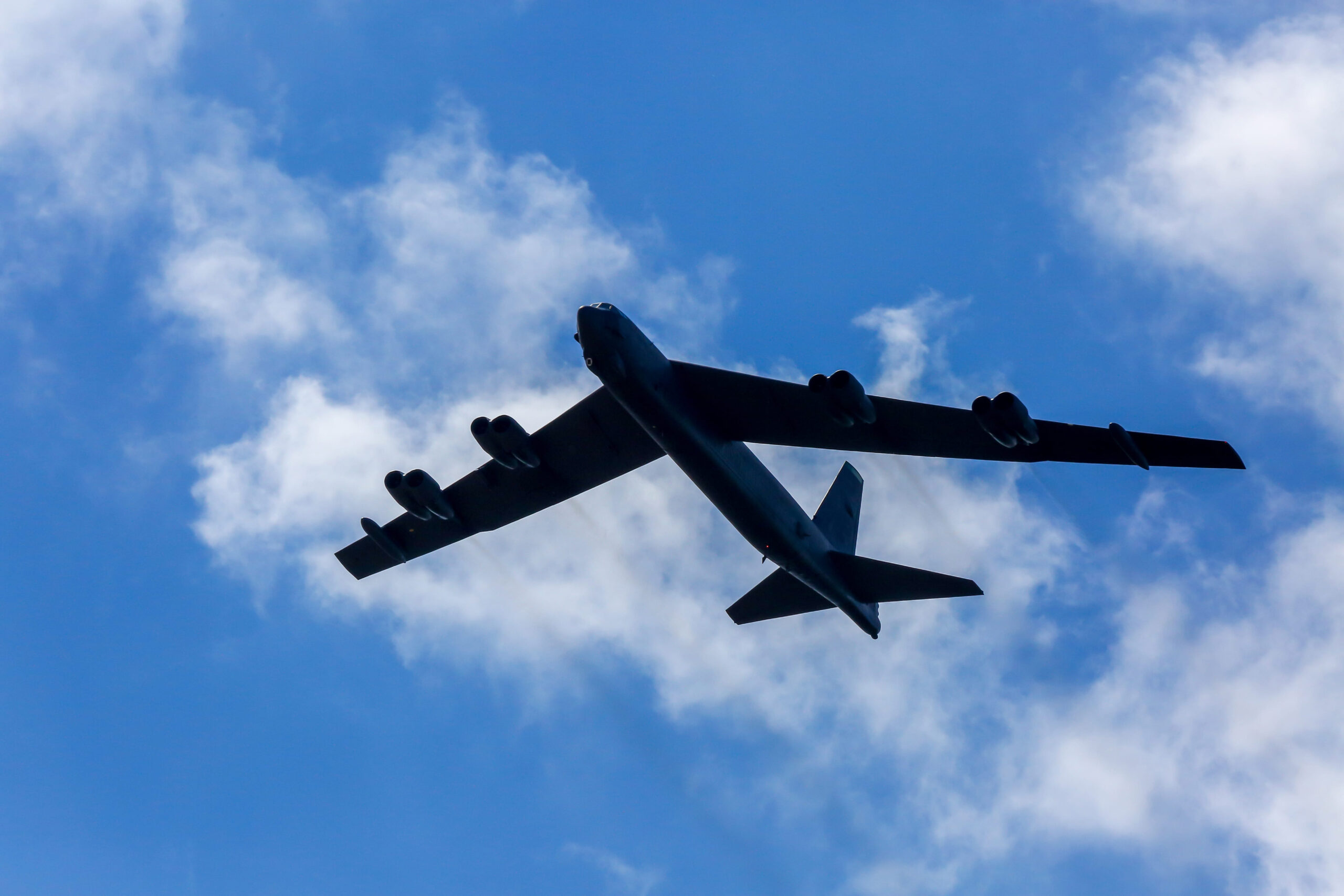
Eight people were killed Monday when a B-52 Stratofortress bomber crashed shortly after takeoff from Edwards Air Force Base in California during a test mission, military officials said.
The aircraft was participating in a radar modernization program when it went down at approximately 11:20 a.m. local time. Col. James Hayes, deputy commander of the 412th Test Wing, confirmed that all eight people aboard died in the crash.
“We lost eight great Americans,” Hayes said during a press briefing, adding that authorities were working to notify the victims’ families.
According to military officials, the bomber was carrying a mix of military personnel and government contractors. Edwards Air Force Base said in an initial statement that the aircraft crashed after takeoff during a routine test mission and that early indications suggested the accident was not survivable.
Video from the scene showed a large fireball and thick smoke rising from the crash site. Debris was scattered across a burned section of desert near the runway as emergency crews responded. Boeing later confirmed that two of its employees were among those killed.
“We extend our deepest condolences to the loved ones of the eight crew members who lost their lives in the B-52 crash at Edwards Air Force Base, California. It is with great sadness that we confirm two Boeing employees were among those on board. We are in contact with their families and offering support,” the company said in a statement.
The cause of the crash remains under investigation. Hayes said investigators could take up to six months to determine what happened. He noted that the aircraft was involved in a radar modernization effort designed to upgrade aging systems on the B-52 fleet.
Former federal aviation accident investigator Jeff Guzzetti told reporters that the aircraft’s rapid descent shortly after takeoff could indicate a problem affecting its ability to maintain controlled flight. He said investigators will likely examine the aircraft’s flight controls, engines, and any equipment being tested during the mission.
Following the crash, Edwards Air Force Base temporarily shut down flight operations and redirected incoming aircraft. The base also suspended non-commercial visitor passes to allow personnel to focus on emergency response efforts.
The B-52 Stratofortress first entered service in 1952 and remains one of the Air Force’s primary long-range bombers. The aircraft can carry both conventional and nuclear weapons and is expected to remain in service into the 2050s following a series of modernization programs.
Fatal B-52 crashes are rare. The last B-52 accident occurred in 2016 near Guam, though all crew members survived. The last fatal B-52 crash took place in 2008, also near Guam. Monday’s crash reduces the Air Force’s B-52 fleet from 76 aircraft to 75.